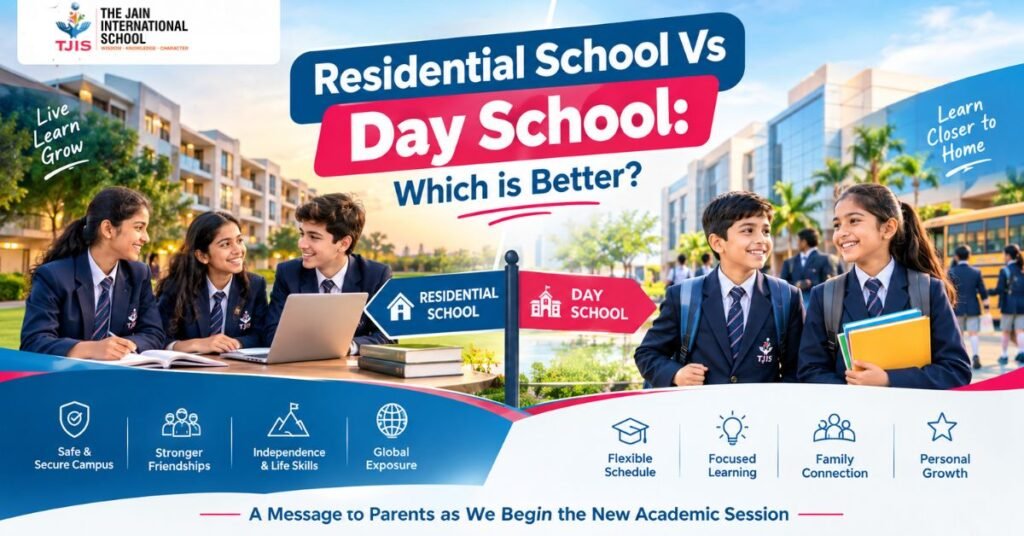
Choosing a school is one of the biggest decisions a parent makes, and the residential school vs day school question often sits at the centre of it. Both formats can deliver excellent results under the CBSE curriculum, but they shape a child’s routine, independence and personality in very different ways. If you are searching for the best CBSE residential school or a strong day school in Hyderabad, this guide explains the differences so you can decide with confidence.
What is a Residential School?
A residential school, also called a boarding school, is an institution where students live on campus during the academic term. Along with classroom teaching, the school manages meals, study hours, sports, healthcare and supervised evening routines. Wardens, house parents and teachers form a round-the-clock support system.
The biggest advantage is structure. Students follow a disciplined schedule from morning assembly to lights-out, which builds time management, responsibility and healthy habits. Because learning continues beyond classroom hours, children receive guided study time, mentoring and access to a wide range of co-curricular activities. Many families exploring a CBSE residential school value this immersive environment, especially when they want consistent academic focus without long commutes or daily distractions.
What is A Day School?
A day school lets students attend classes during the day and return home each evening. Parents stay closely involved in meals, bedtime, values and everyday conversations. Day schools suit families who want their children to grow up at home, keep neighbourhood friendships and enjoy regular family time.
Academics at a day school can be equally strong, particularly when the school follows the CBSE framework with qualified teachers and modern facilities. However, a child’s after-school hours depend heavily on the home environment. Screen time, homework supervision and access to extracurricular activities vary from family to family.
Residential School Vs Day School: Key Differences
Academic Support and Discipline
Residential schools typically provide supervised study sessions, remedial help and easy teacher access, so doubts are resolved quickly. Day schools rely more on tuition or parental guidance after school hours. Discipline in a boarding school is built into the routine, while at a day school it is shared between the school and the home.
Personality Development and independence
Living with peers teaches residential students to manage their belongings, resolve conflicts, adapt to diverse cultures and make their own decisions. They often develop leadership, resilience and confidence early. Day scholars enjoy emotional comfort and strong family bonding, but they may have fewer opportunities to build self-reliance.
Cost, Convenience and Family involvement
Day schools generally have lower fees and let parents see their child every day. Residential schools cost more, but the fee usually covers accommodation, meals, laundry and activities, often reducing spending on commuting, tuition and extra coaching. Parents stay connected through scheduled calls, visiting days and progress meetings.
Which Environment Suits Your Child?
There is no one-size-fits-all answer. Consider these factors before deciding:
- Age and Temperament: Children aged ten and above who are curious and sociable usually adapt quickly to hostel life. Younger or very sensitive children may do better at home.
- Learning Needs: Students who need structure, focus and distraction-free study often benefit from a boarding environment.
- Family Circumstances: Parents with demanding jobs or frequent travel may find a residential setup offers stability and safety for their child.
- Long-Term Goals: Students aiming for competitive exams or national-level sports often gain from the extended practice hours a residential campus offers.
Whichever option you lean towards, visit the campus, meet the teachers and wardens, and involve your child in the conversation. A child who feels heard is far more likely to settle in happily.
Why Choose A CBSE Residential School in Hyderabad?
Hyderabad is home to many reputed institutions, so look beyond brochures. A good CBSE residential school should offer experienced faculty, safe and hygienic hostels, nutritious meals, 24/7 medical support, sports facilities and strong pastoral care. You can explore the hostel and campus facilities to understand daily life on campus, review the admission process to plan timelines and eligibility, and read more about our school and its values to see if the vision matches your family’s expectations.
Parents searching for a residential school near Hyderabad should also check the student-teacher ratio, board exam results, co-curricular programmes and communication policies. Transparency in these areas is a reliable sign of a school that puts students first.
Conclusion
Still unsure whether a residential school or a day school is right for your child? Contact us TJIS our admissions team is ready to guide you with campus visits, curriculum details and personalised advice.