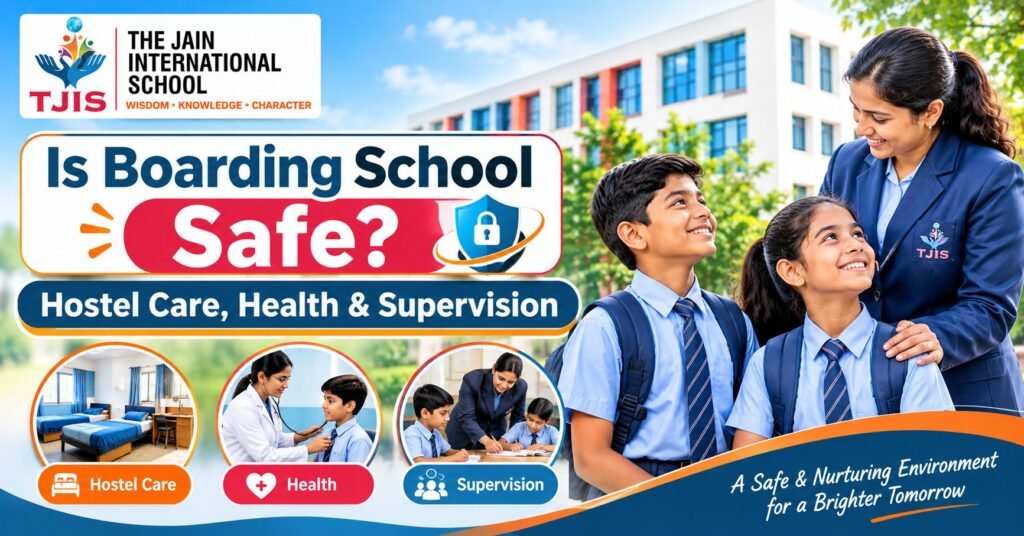
Sending a child to live on campus is an emotional decision, and safety is always the first concern. Parents want to know who looks after their child at night, what happens when a student falls ill and how problems are noticed early. At TJIS, a CBSE school in Hyderabad with a residential campus, student wellbeing is treated as the foundation of learning. This guide explains how well-run boarding schools protect students through hostel care, health support and thoughtful supervision.
Is Boarding School Safe? What Parents Should Know
A good boarding school is often one of the most structured environments a child can grow up in. Meals, study hours, sports, rest and recreation are all planned and supervised by trained adults. This does not mean every school is equally safe, so parents should look closely at systems, not slogans. Safety rests on three pillars: a secure hostel, strong health care and active supervision combined with emotional support.
Hostel Care and Campus Security
Secure Campus and Controlled Access
Reliable residential schools limit entry to the campus and hostel blocks, keep visitor records and use trained security staff. Surveillance in common areas, clear visiting hours and strict rules about who can take a child out of the campus add further protection. Boys’ and girls’ accommodation should be separate and supervised at all times.
Trained Wardens and Round-The-Clock Care
Wardens and house parents are the first point of contact for students after school hours. They ensure children wake up on time, complete their routines and are present for roll calls. A warm, approachable warden helps children share small worries before they grow into big ones.
Clean, Comfortable Living Spaces
Safe hostels are also hygienic ones. Look for airy rooms, comfortable beds, regular cleaning, clean washrooms and well-lit study areas. A premium residential campus should feel like a second home, not just a dormitory.
Health, Nutrition and Medical Support
On-Campus Infirmary and Emergency Readiness
Children fall ill, scrape knees and have sports injuries, so quick medical attention matters. A school should have an infirmary or health care unit, a qualified nurse, visiting doctors and a clear emergency plan with a nearby hospital. Parents should also be informed promptly whenever a child is unwell. At TJIS, the campus includes an infirmary and health care unit as part of its core facilities.
Hygienic Meals and Healthy Routines
Growing children need balanced nutrition. Check that the kitchen follows hygiene standards, menus are varied and food is served in a clean dining hall under supervision. Fixed sleep schedules, outdoor activity and fitness sessions build healthy habits that last well beyond school. You can see how daily life is organised on the campus life page.
Supervision, Discipline and Emotional Wellbeing
A Supervised Daily Routine
From wake-up to lights-out, a structured timetable keeps students engaged and accounted for. Supervised study hours, sports practice and recreation leave little room for unsafe situations or unhealthy screen habits. Discipline in a good school is firm but fair, built on respect rather than fear.
Anti-Bullying Policy and Counselling Support
Physical safety is only half the picture. Children also need to feel emotionally secure. Strong schools have clear anti-bullying rules, easy ways for students to report concerns and counsellors or mentors who listen without judgement. Mindfulness and life skills programmes help children manage stress, homesickness and peer pressure with confidence.
Open Communication With Parents
Regular phone calls, progress updates, parent-teacher meetings and visiting days keep families involved. A transparent school shares both good news and concerns promptly. To understand the school’s values and approach to student care, you can read more about TJis.
Safety Checklist For Parents Visiting A Boarding School
Use these questions during your campus tour:
- Security: Who can enter the campus, and how are visitors recorded?
- Wardens: How many students does each warden supervise, and are they available at night?
- Medical Care: is there an infirmary, a nurse and a hospital tie-up for emergencies?
- Food and Hygiene: Can you see the kitchen, dining hall and a sample menu?
- Student Voice: is there a clear process for students to report concerns?
- Communication: How often will you speak to your child and receive updates?
Final Thoughts
Boarding school can be a safe, nurturing and enriching experience when the right systems are in place. Look for secure hostels, accessible medical care, attentive supervision and a culture where children feel heard. Visit the campus, ask direct questions and trust both your observations and your child’s comfort.
Conclusion
Contact Us Every child deserves a school that nurtures confidence, curiosity and character. If you are looking for a trusted CBSE school in Hyderabad, TJIS is here to help. to book your campus visit and take the first step towards your child’s bright future.
Have questions about hostel life, health care or daily supervision? Our admissions team will gladly show you around and answer every concern. Contact Us Today to schedule a campus visit.